

For a procurement analyst, the most expensive apron feeder is not always the one with the highest purchase price. It may be specified with capacity, steelwork, and drive power the process will never use. Just as often, it is the “bargain” feeder that looks compliant in a bid comparison but introduces chronic wear, unavailable spares, and unplanned stoppages.
The answer is not to buy the biggest heavy-duty apron feeder available, nor to award the order to the lowest number. It is to right-size the machine to the actual duty—and to make every supplier expose the assumptions behind its offer. That approach lets purchasing teams remove nonessential cost without transferring hidden risk to operations and maintenance.
This is especially important at the front of a mining or coal-handling circuit. When an apron feeder cannot extract material reliably, the impact reaches the crusher, conveyor, screen, and production schedule downstream. A sourcing decision must balance capital expenditure with the practical cost of owning the asset.
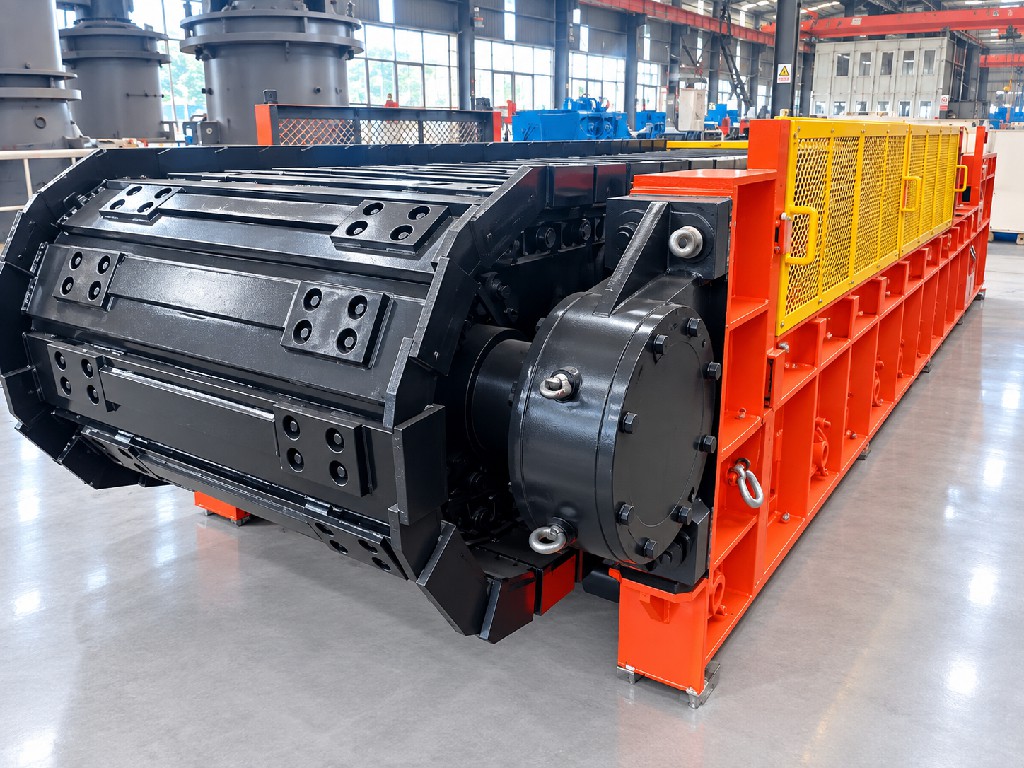
An over-engineered apron feeder is not simply a robust machine. Robustness is essential for large lumps, high impact, abrasive ore, hot material, or demanding availability targets. The problem begins when a specification includes features that do not solve an identified operating risk.
For example, a feeder may be oversized because the enquiry uses a theoretical peak tonnage rather than the plant’s achievable feed rate. A very high chain class may be selected without considering actual hopper load and lump size. A complex monitoring package may appear even though the site has no defined response to the data. In each case, the buyer pays for capability that may never protect production.
Under-engineering is the opposite error. Thin pans, a poorly supported loading zone, a drive that cannot handle a loaded start, or poor take-up access may reduce the quoted apron feeder price. They do not reduce the punishment imposed by impact, abrasion, sticky fines, or uneven loading. The result is a false economy: purchase-order savings followed by reactive maintenance, emergency freight, and lost operating time.
The right question is therefore not, “How heavy is this mining apron feeder?” It is, “Which design features are necessary for our documented duty, and which are only expensive insurance against an undefined scenario?”
The best budget control happens before quotations arrive. Give all bidders the same design basis. Without it, one supplier may price for steady-state conveying while another allows for a full hopper, high impact, and a harsh duty cycle. Their quotations may look comparable, but they are not offering the same machine.
Include these items in the enquiry for an apron feeder:
This information gives an apron feeder manufacturer something useful to engineer against. It also makes deviations visible. Require a supplier to state any assumed bulk density, material head, or start-up condition on its data sheet. A low quote based on a lighter duty should not compete silently with a quotation designed for the real application.
Capacity is a common source of unnecessary cost. A mining apron feeder needs enough operating range for stable downstream feed and realistic surges. Yet selecting capacity from a one-off theoretical maximum can inflate pan width, chain load, drive size, support structure, and shipping cost.
Ask the process team for the normal rate, maximum sustained rate, and duration of peaks. Then establish whether the feeder meters flow, reclaims stored material, or protects a downstream crusher from overload. Those duties call for different margins. A variable-speed drive is worthwhile when its range has a real process value, not merely because it appears in a proposal.
Drive selection deserves the same discipline. It must account for material load and starting condition, but excessive motor power is not a substitute for correct mechanical layout. Require suppliers to state their calculation basis, rated torque, service factor, and assumptions for loaded starts. Compare these alongside the gearbox, sprocket, chain, and control method—not motor kilowatts in isolation.
Once the duty is clear, evaluate the parts that influence availability and maintenance: pan construction, chains, rollers, sprockets, loading-zone protection, shafts, bearings, and frame. Do not overlook skirt sealing, cleanup access, removable guards, and lifting provisions.
This is where apron feeder total cost of ownership becomes more useful than a purchase-price ranking. Request a line-by-line scope comparison. Review commissioning and operating spares with maintenance. Ask for replacement criteria and lead times; do not accept a wear-life promise without its material and duty basis.
The goal is not premium components everywhere, but components whose failure would be costly at your site. A remote mine may carry more critical spares; a plant with shutdown windows may prioritise quick roller replacement. A coal apron feeder handling wet fines may need sealing and cleanout more than an unnecessarily wide pan deck.
A low-priced apron feeder can be good value when efficient manufacturing and a proven standard design genuinely match the duty. But a major price gap needs a written explanation. Check for omitted engineering, testing, controls, guards, wear protection, documentation, commissioning support, or spares. Compare pan dimensions and material, chains and rollers, frame, drive, warranty, delivery terms, and post-shipment responsibilities.
Low-quality equipment rarely announces itself with a label. It appears as ambiguous details, missing assumptions, vague material descriptions, or promises not traceable to a drawing. Make scope and performance measurable before award, while the buyer still has negotiating leverage.
An effective bid matrix separates commercial ranking from technical suitability. Use separate columns for price, design duty, capacity range, loaded-start condition, key components, maintenance access, spares, warranty, service response, delivery, and exclusions. Mark every assumption and exception.
Bring maintenance and operations into the review early. Can the drive be accessed without dismantling other equipment? Is there room to remove a roller? Are critical spares identifiable and obtainable? Procurement owns the commercial decision, but cross-functional evidence makes it defensible.
Before issuing the purchase order, agree on capacity range, safety devices, interfaces, documentation, inspection points, and commissioning responsibilities. If a factory acceptance test is appropriate, state the inspection scope and records required.
Right-sizing an apron feeder sourcing budget is not a race to reduce the specification. It is a process of matching the feeder’s design to the material, loading arrangement, production target, and maintenance reality of the site. Spend where it reduces a known life-cycle risk. Remove cost where it only purchases an unused theoretical margin.
For procurement teams, this is the credible middle ground. A properly specified apron feeder avoids over-engineering while resisting the long-term cost of a low-quality machine. The outcome is a more predictable supply chain, supportable maintenance, and reliable extraction from the first loaded start.
Compare the proposed apron feeder specification with documented capacity, material data, hopper load, impact conditions, and start-up requirements. Features that do not address a credible operating or maintenance risk may be unnecessary, but remove them only after a technical review.
For each apron feeder quotation, compare pan construction, chains, rollers, sprockets, frame and loading-zone support, drive and loaded-start capability, guarding, access, spares, warranty, and supplier assumptions. A comparable price review requires comparable scope.
A low initial price can exclude durability, maintainability, support, or critical spares. If that leads to repeated repairs, long spare-part lead times, production interruptions, or unsafe maintenance work, the saving can be outweighed by life-cycle cost.
Provide capacity range, coal bulk density, maximum lump size, moisture and fines, hopper geometry, material head, drop height, operating schedule, start-up condition, and interface requirements. Wet or sticky coal duties should also address sealing and cleanout needs.
Not necessarily. Condition monitoring is valuable when the site can use the data to plan action and when the monitored failure mode justifies the cost. It should complement—not replace—appropriate mechanical design, regular inspection, and a practical spare-parts strategy.