


When a Heavy-Duty Apron Feeder reaches the dispatch bay, it represents much more than a completed fabrication order. It answers a hard question at the front end of a mine, quarry, cement line or coal-handling plant: how can large, abrasive, wet or sticky material be withdrawn steadily when impact, dust and downtime are part of daily operation? The answer is not a light conveyor pushed beyond its limits. It is a purpose-built feeder designed to accept severe loading, meter the material and protect every process that follows. This unit, fully assembled and ready for shipment, is built for that first and decisive metre of bulk material handling.
The visible deck tells only part of the story. Beneath the replaceable pans are the components that determine service life: a rigid main frame, impact rails, rollers, chains, shafts, drive assemblies and carefully controlled clearances. Material may arrive from a truck, a loader or a hopper in irregular surges. The feeder has to distribute those forces without allowing pan deflection, chain misalignment or uncontrolled discharge. That is why a successful mining apron feeder is engineered around the material itself—its maximum lump size, bulk density, abrasiveness, moisture, temperature, flow behaviour and required throughput—not around a catalogue number alone.
For a heavy-duty application, the loading zone deserves particular attention. Reinforced pans carry the burden and form a moving bed that absorbs impact. Wear-resistant liners protect high-contact surfaces, while the supporting structure transfers load into the frame rather than concentrating it at individual components. Correct pan overlap and skirt-board clearance help contain fines and reduce spillage. These details may seem small on a general arrangement drawing, yet they directly affect housekeeping, component wear and operator confidence on site.
Controlled feeding is the next priority. A primary crusher cannot perform consistently if it receives alternating floods and empty intervals; nor can a downstream belt operate efficiently when burden depth changes without warning. The Heavy-Duty Apron Feeder creates a stable, predictable material stream at low operating speed. Drive selection, reduction ratio, chain pitch, sprocket design and speed control must work as a system. Where the process demands adjustment, a variable-speed drive can give operators practical control over feed rate while maintaining the torque required for start-up under load. The objective is straightforward: smooth transfer, fewer process interruptions and a better-protected crushing circuit.
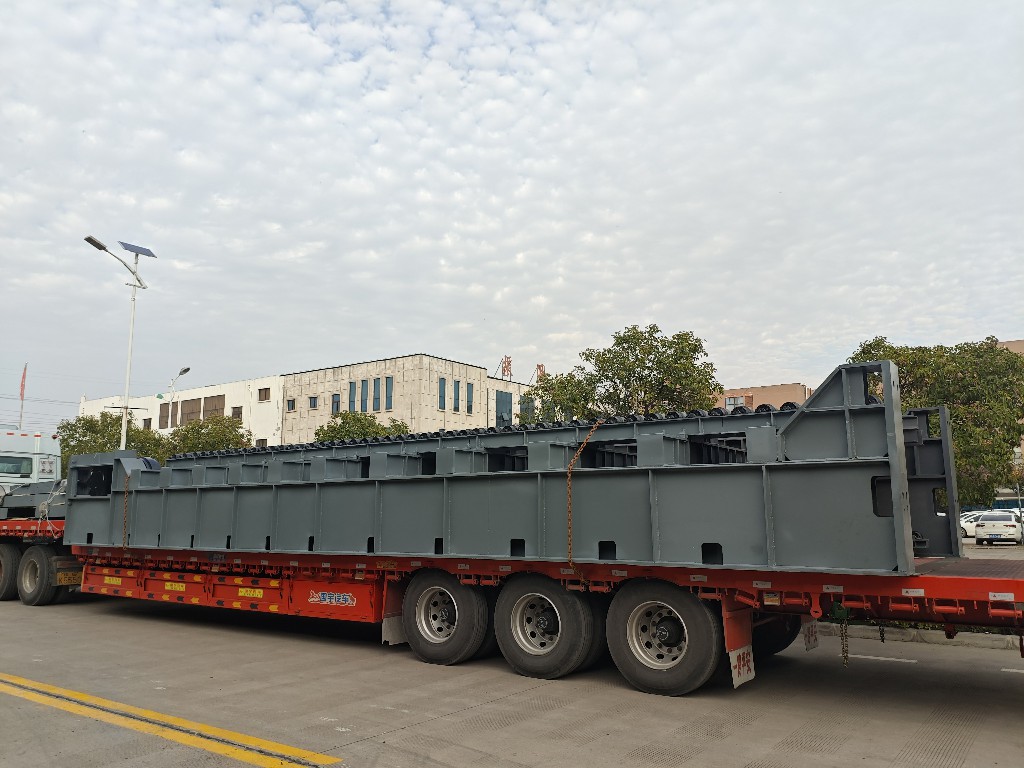
Durability, however, is not achieved by adding steel indiscriminately. It comes from placing strength where the duty requires it and keeping service access realistic. A sound apron feeder design considers fatigue loading, frame stiffness, bearing protection, chain tensioning, lubrication strategy and the space technicians need for inspection or replacement. Segmented wear components and accessible drive-side arrangements can shorten maintenance work when time matters. Guards, emergency pull-cord locations and other safety provisions should be considered as part of the layout from the beginning, not attached as an afterthought.
Ready for dispatch therefore means more than applying paint, attaching a nameplate and securing the shipment. Before a machine is released, a responsible quality process should verify critical dimensions, check the fit of moving assemblies, confirm drive rotation and perform a no-load running inspection. Weld quality, fastener security, lubrication points, guarding and electrical interfaces should be reviewed against the approved specification. Equally important are the records that travel with the equipment: general arrangement drawings, foundation and interface information, operating guidance, spare-parts recommendations and packing details. Clear documentation removes uncertainty long before the commissioning team reaches the site.
Export readiness adds another layer of discipline. A large apron feeder is often shipped in modules, and every module must arrive identifiable, protected and practical to reassemble. Lifting points, match marks, connection hardware and preservation measures all influence the speed and safety of installation. Good packing is not simply about surviving ocean or overland transport. It is about ensuring that the machine received at site is the machine inspected at the factory.
For project teams, the value of a Heavy-Duty Apron Feeder lies in its role as a system component. Its interface with the receiving hopper, chute work, crusher inlet, discharge conveyor and control philosophy must be understood early. A feeder with impressive capacity on paper may still disappoint if the hopper geometry promotes bridging, the chute creates excessive wear, or the downstream equipment cannot accept the selected burden. Close technical communication during design prevents these costly compromises and helps align the equipment with the plant’s actual operating conditions.
The shipment itself is the beginning of a relationship, not the end of a transaction. Before site start-up, the most effective projects align installation sequence, power and control interfaces, initial lubrication checks and the responsibilities for commissioning. Operators should know what normal chain tracking, pan movement and material distribution look like before full production begins. A documented handover creates a reference point for future inspections and gives maintenance teams the confidence to act before a minor condition develops into a production event. That early discipline is one of the least visible, yet most valuable, advantages of working with an experienced apron feeder manufacturer.
As this Heavy-Duty Apron Feeder stands ready for delivery, it carries a simple promise: dependable material flow begins with dependable engineering. From coal and limestone to hard rock ore and reclaimed stockpile material, the first machine in the line often determines the rhythm of the entire plant. Selecting a robust, application-led apron feeder is an investment in safer handling, steadier production and long-term availability.
A Heavy-Duty Apron Feeder is suitable for coarse, heavy, abrasive, wet or sticky bulk materials, including run-of-mine coal, iron ore, copper ore, limestone, aggregates and reclaimed stockpile material. Pan, liner and chain configurations should be selected according to the actual material properties.
A Heavy-Duty Apron Feeder is sized according to required capacity, maximum lump size, bulk density, material flow characteristics, hopper geometry and downstream equipment requirements. Correct sizing considers both normal operating conditions and peak loading scenarios.
A Heavy-Duty Apron Feeder is preferable where material is large, highly abrasive or subject to high-impact loading. Its robust pans and chain-supported construction withstand conditions that may cause rapid damage or unstable feeding on conventional belt equipment.
Routine Heavy-Duty Apron Feeder maintenance includes checking chain tension and tracking, inspecting pans and wear liners, verifying roller and drive condition, and maintaining lubrication where applicable. Easy service access and planned inspections help extend equipment availability.