


Wet, sticky coal is one of the most frustrating materials to handle in a mining or coal preparation plant. It can cling to hopper walls, bridge across chutes, pack into transfer points, and overload downstream conveyors. What begins as a small build-up can quickly become a production bottleneck, forcing operators to stop the line for manual clearing and exposing personnel to unnecessary safety risks.
A properly selected feeder breaker is designed to solve these problems at the source. By combining controlled feeding and primary size reduction in one robust machine, a feeder breaker helps mines process difficult coal more consistently—even when moisture, fines, clay contamination, and variable lump sizes create challenging operating conditions.
Coal becomes difficult to handle when moisture combines with fine particles, clay, shale, or weathered material. Instead of flowing freely, the material forms compacted masses that resist movement. This commonly occurs during rainy seasons, in underground operations with high humidity, or when coal is stored outdoors for extended periods.
The problems are especially severe at receiving hoppers, bunker discharge points, and conveyor loading stations. Large lumps can bridge over an opening while wet fines fill the gaps between them, creating a stable blockage. Once flow stops, material may continue accumulating above the blockage, increasing pressure on the hopper structure and making removal more difficult.
Traditional feeding equipment may struggle in these conditions. A conventional vibrating feeder can lose efficiency when sticky coal adheres to the pan or discharge area. A simple belt feeder may move material forward, but it does not reduce oversize lumps or break compacted coal masses before they reach the conveyor system.
This is where a feeder breaker offers a practical advantage.
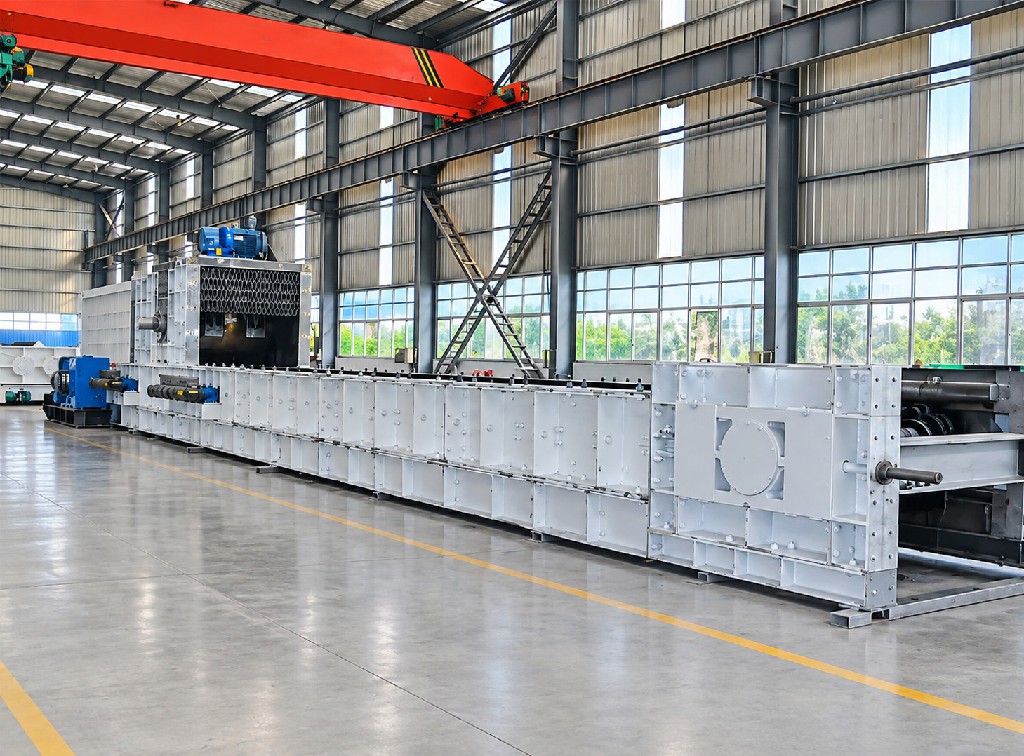
A feeder breaker combines two essential functions: it withdraws material from a hopper or ROM coal stockpile and breaks it down to a controlled size before discharge. The feeder section moves coal steadily toward the crushing chamber, while the breaker rotor reduces large lumps and releases compacted material.
For wet, sticky coal, this integrated approach is important because it prevents large, irregular material from moving uncontrolled into the downstream system. Instead of allowing oversize coal to create blockages in chutes or damage conveyor components, the feeder breaker processes it at the receiving point.
The machine’s heavy-duty chain conveyor or apron-style feeder provides positive material movement. Unlike equipment that depends only on vibration or gravity flow, the feeder breaker actively pulls coal from the hopper. This helps disrupt bridging and reduces the likelihood of stagnant material remaining above the discharge opening.
As coal enters the breaker section, rotating picks or teeth break larger lumps against a sizing grid or breaker plate. The material exits at a more uniform size, improving flow through conveyors, transfer chutes, screens, and crushers.
One of the biggest benefits of a feeder breaker is controlled discharge. In a coal handling plant, downstream equipment performs best when it receives a stable, predictable feed rate. Sudden surges of wet coal can overload belts, bury transfer points, and reduce screening efficiency.
A feeder breaker regulates material flow from the beginning of the process. Its variable-speed drive can be adjusted to match the capacity of the conveyor, crusher, or screening plant that follows. This is particularly useful when coal quality changes during a shift or when moisture levels increase after rainfall.
Consistent feeding also reduces belt slip, spillage, and uneven wear on downstream equipment. By delivering coal at a controlled rate and reduced top size, the feeder breaker gives the entire material handling system a better chance of operating smoothly.
Wet coal often arrives in large, compacted slabs or frozen-like masses. These masses can be too large for transfer chutes and difficult for conventional conveyors to manage. A feeder breaker breaks these pieces early, before they reach more sensitive equipment.
The breaker rotor applies concentrated mechanical force to the coal, separating lumps and reducing oversized material. Properly designed picks can handle coal mixed with occasional rock, shale, or tramp material while maintaining efficient size reduction.
However, selecting the right feeder breaker configuration matters. For highly abrasive coal or coal containing hard rock contamination, wear-resistant picks, reinforced breaker components, and heavy-duty chains may be required. For softer but extremely sticky coal, the design should prioritize open discharge areas, self-cleaning features, and suitable rotor geometry to prevent material packing.
The goal is not simply to crush coal smaller. It is to produce a reliable, continuous material flow with minimum downtime.
When specifying a feeder breaker for difficult coal, operators should look beyond rated capacity alone. The following features can have a major impact on reliability:
The machine should also be matched to the actual material characteristics. Feed size, moisture level, lump strength, clay content, bulk density, and required product size all influence feeder breaker selection. A unit that is oversized only in throughput but poorly matched to material behavior may still experience plugging and excessive wear.
Manual blockage removal is dangerous, time-consuming, and costly. Operators may need to isolate equipment, lock out drives, and clear compacted coal from confined or elevated locations. These unplanned stoppages reduce plant availability and can disrupt the entire production schedule.
A reliable feeder breaker minimizes these interventions by breaking and regulating material before blockages develop. It also protects downstream conveyors, crushers, and screens from oversized coal loads. Over time, this can reduce emergency maintenance, improve operating safety, and support a more stable tonnage rate.
For mines handling ROM coal in difficult weather conditions, a feeder breaker is more than a feeding machine. It is a critical part of a dependable coal handling strategy.
Wet and sticky coal does not have to dictate plant performance. With the right feeder breaker, mines can overcome bridging, reduce oversize material, stabilize feed rates, and keep coal moving through the system with fewer interruptions.
The best solution begins with a careful assessment of the coal’s moisture, size distribution, contamination level, and required processing capacity. When properly engineered for the application, a feeder breaker turns difficult material from a recurring blockage risk into a controlled, manageable feed stream.
A feeder breaker uses positive feeding and primary size reduction to pull wet coal from the hopper, break compacted lumps, and deliver material at a controlled rate. This reduces bridging and prevents oversized coal from blocking downstream chutes and conveyors.
Yes. A heavy-duty feeder breaker can process ROM coal containing rock, shale, and other contaminants. The machine should be specified with suitable breaker picks, wear-resistant components, and overload protection for the expected material conditions.
For sticky coal, choose a feeder breaker with a robust chain feeder, variable-speed control, open discharge design, accessible maintenance points, and breaker components designed to resist material build-up and wear.
In many coal handling applications, a feeder breaker performs the first-stage breaking function and can reduce the load on a downstream crusher. Whether it fully replaces a primary crusher depends on feed size, required product size, coal hardness, and plant design.
Feeder breaker capacity should be based on required tonnes per hour, maximum lump size, coal moisture, bulk density, material variability, and the capacity of downstream conveyors or processing equipment. A site-specific assessment is essential for reliable performance.