


In a crushing plant, the most expensive tonnes to process are often the tonnes that never needed crushing. Run-of-mine coal and mineral ores rarely arrive as a uniform stream of coarse lumps. The feed usually contains oversize, near-size particles and fines already below the required product top size. When the whole mixture enters a mineral sizer, the machine handles material that may already be saleable. That is where pre-screening earns its place.
Pre-screening separates the fraction that is already small enough before it reaches the mineral sizer. The undersize travels through a bypass chute or conveyor, while only the oversize fraction enters the crushing chamber for controlled reduction. The objective is not simply to add a screen in front of a crusher. It is to make every tonne take the shortest, most appropriate route to specification.
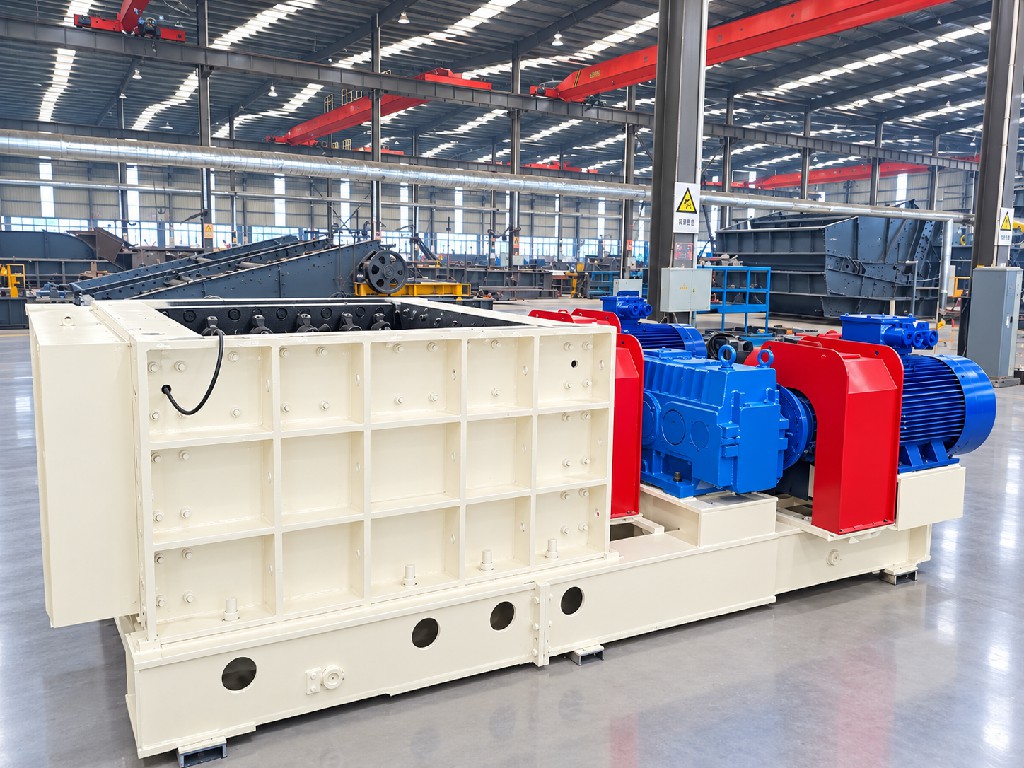
A mineral sizer uses low-speed, high-torque toothed rolls for controlled size reduction. It performs best when the feed actually needs to be sized. Material already below the target size consumes capacity without adding value; it may also be reduced further, creating fines with lower value or complications downstream.
With the right pre-screen aperture, suitable fines are diverted before the mineral sizer. Depending on the flowsheet, the bypass stream can be blended with the crushed product, sent directly to a stockpile, or routed to a wash plant, beneficiation circuit or downstream screen. The result is a more intentional product stream: the sizer handles the lumps that require reduction, while correctly sized material keeps moving.
This distinction matters in both coal and mining applications. In thermal coal preparation, excessive degradation can increase fines and affect handling or washing performance. In mineral processing, unnecessary crushing may alter the feed balance to the next stage and waste energy. Pre-screening is therefore a yield decision as much as a capacity decision.
Rated mineral sizer capacity is not the same as useful plant output. Real performance depends on feed gradation, bulk density, moisture, clay, tooth configuration, operating gap, feeder control and downstream conveyor availability. A feed with a large undersize share can make the sizer appear busy while the plant processes material that should have bypassed it.
Removing that fraction allows more of the sizer’s crushing zone to be used for true oversize reduction. It also promotes a more stable load on the rolls, drive train and feeder. A consistent, evenly distributed feed is especially important for a twin-shaft mineral sizer: it helps the teeth engage material predictably and reduces the alternating high- and low-load conditions that disrupt production.
The improvement must be calculated from site data, not assumed from a brochure. Plants should measure the feed size distribution over representative operating periods, then estimate the percentage capable of bypassing the sizer. Even a moderate bypass fraction can materially change the effective duty of the crushing stage. The right question is not, “How many tonnes can the machine swallow?” It is, “How many tonnes of specification product can the circuit produce reliably?”
Pre-screening can also reduce avoidable wear. Every tonne kept out of the mineral sizer avoids contact with tooth segments, roll bodies, breaker bars and liners when no reduction is required. In abrasive ore or high-ash coal, that can support longer wear life and more predictable maintenance planning. Less needless circulation through the crushing chamber may also reduce carryback and dust generation, although proper transfer sealing and dust extraction remain essential.
The screen adds its own maintenance duty, so it must be treated as a productive asset. Screen media, chutes and the bypass conveyor must suit the actual material and peak flow. If the bypass chute blocks, the pre-screen becomes the new bottleneck. Good installations provide safe inspection access, replaceable wear liners and enough surge capacity to keep the mineral sizer fed during normal feed variations.
There is no universal screen type or aperture for every mineral sizer circuit. A grizzly may be suitable for coarse scalping and protection against oversize. A roller screen can provide robust continuous separation ahead of coal and softer-mineral sizing. A vibrating screen may be preferred where separation accuracy is more important. For wet, sticky or clay-rich material, screen media, motion and open area deserve particular attention because blinding can quickly erase the expected benefit.
The cut size must be coordinated with the required product top size, the mineral sizer setting, expected screen efficiency and the actual particle-size distribution. A nominal aperture does not mean every particle below that dimension will pass; near-size particles, moisture and particle shape all affect separation. Practical trials and material samples are more valuable than selecting a deck solely by its nominal opening.
Pre-screening is not automatically the best choice for every operation. If the feed contains very little undersize, or if every size fraction must be crushed for a specific downstream liberation objective, the extra equipment may not justify itself. But where the feed includes a marketable or process-ready fine fraction, a well-designed pre-screen is often the missing link between high machine utilisation and high-value production.
After commissioning, track more than total throughput: bypass percentage, mineral sizer motor load, tooth wear rate, unplanned stoppages, final product size distribution and tonnes accepted by the customer or downstream process. These indicators reveal whether the pre-screen is delivering more of the right product with less unnecessary reduction.
For operators looking to improve a coal crushing plant or mineral processing line, pre-screening before a mineral sizer is a practical first question to ask. It turns a portion of the feed from an avoidable crushing load into a controlled product stream—and that small change can have a decisive effect on availability, operating cost and saleable yield.
A mineral sizer pre-screen removes material that is already below the chosen cut size. This keeps suitable fines out of the crushing chamber, helps prevent over-crushing and directs more mineral sizer capacity to oversize material.
Depending on the material and required cut size, a mineral sizer pre-screen may be a grizzly, roller screen or vibrating screen. The selection should be based on feed size distribution, moisture, clay content, capacity and required separation accuracy.
It can, but the design needs careful attention. Wet or clay-rich feed can blind screen openings, so screen media, motion, open area, chute angles and cleaning access should be selected for the actual material rather than nominal capacity alone.
Choose the aperture by reviewing representative feed samples, target product top size, mineral sizer settings and screen efficiency. Validate the choice in operation, because particle shape, moisture and near-size material influence the real separation point.